a network of surgeons, anesthesiologists, CRNAs, perioperative nurses and surgical technologists offering their connections and resources to improve surgical care in Ethiopia
Based on my conversations with multiple surgeons as well as with ministry officials, there appears to be a great opportunity to enhance the training of Ethiopian orthopedic surgeons and residents by inviting them for US observerships. Foreign trainined physicians are not allowed to practice in the US without passing all three USMLE exams and obtaining medical licensure, thus formal fellowship training in the US is almost impossible to offer. However, for an Ethiopian attending surgeon or senior resident, spending one or more months in a US hospital would greatly boost their knowledge.
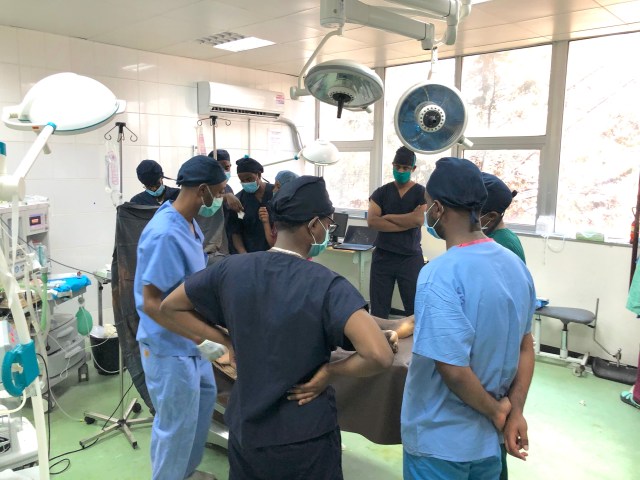
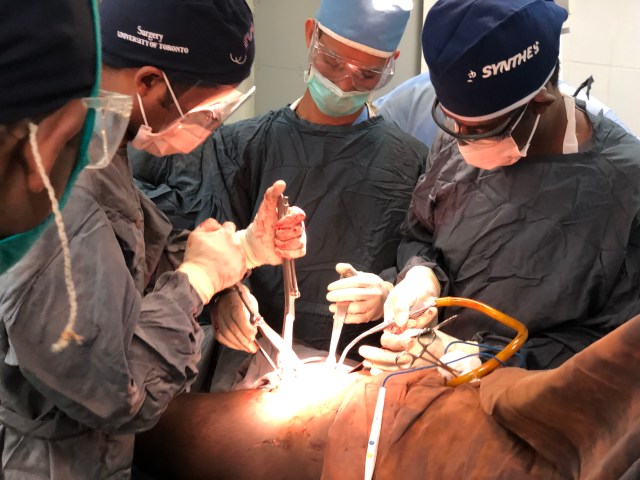
Orthopedic residents preparing for a surgical procedure
With regards to orthopedics, the surgeons I spoke with named sports, pediatrics, oncology, arthroplasty and spine as priorities. Pediatrics, for example, is a significant deficit as the main exposure for Addis Ababa residents has been the pediatric Cure hospital in town. This hospital takes care of childhood deformities at no charge, somewhat analogous to Shriner hospitals in the US. However, they can only host a portion of the residents in Addis.For example, the Black Lion program by itself has 25 residents a year. Thus many residents simply miss exposure to pediatrics.
Beyond orthopedics, there is an opportunity to make a significant impact in anesthesia, especially with regional blocks. Other deficits include musculoskeletal pathology and musculoskeletal radiology. At Tikur Anbessa I attended an ortho-radiology conference where two tumor cases were presented. There is a musculoskeletal radiology fellowship and the first almost-graduated fellow presented. His interpretation of radiographs and MRI, as well as his differential diagnosis were very good to excellent. However, he is the only one MSK (musculoskeletal) radiologist currently in the country. Other potential opportunists include hospital administration, quality control and surgical nursing.
In conjunction with these two residency training programs and with the enthusiastic endorsement of ministry officials, we have tentatively agreed to initiate a standing obervership program for Ethiopian orthopedic surgeons and residents at my institution, Inova Fairfax Hospital. I will share details in future posts. I invite any other diaspora to join in supporting these hard working and ambitious Ethiopian physicians.
On my second day I visited AaBET hospital, which is part of St Paul University and located just behind Yohannes church, a short distance from the main St Paul campus in Gulele. The initials stand for “Addis Ababa Burns, Emergency and Trauma”.
As the main trauma hospital in Addis Ababa, it is overflowing with orthopedic injuries. In fact orthopedics is about 70% of its volume. I met with Dr. Wegagen chief of orthopedics and Dr. Mamo Deksisa, who was my guide for the day. As with just about all the surgeons I met, Dr. Mamo is very young by our standards for a staff physician with significant responsibilities – but clearly also very capable.
My first stop was morning conference where I gave an hour long lecture on bone and soft tissue tumors. Following this, Drs Mamo, Wegagen and I sat in the call room and talked for some time about the department, their needs and ideas about how can collaborate. Dr Mamo was extremely generous with his time and gave me tour of hospital as well as taking me to main St Paul campus where we tried to meet with Dr. Wondemagegn, the provost (CEO). Unfortunately, his waiting room was packed so we left and toured the grounds. Most of this is now a massive construction site where large buildings are are going up, planned for cardiology, gastroenterology, women’s health and oncology. We saw the undergraduate medical school buildings where Dr Mamo had attended and then we had a very tasty injera meal at his favorite lunch place near AaBET hospital. Remember in Ethiopia, as in many countries, students go directly from secondary school to medical school.
Luckily, it was his day off so we continued our tour. We went back to AaBET to catch up with Dr. Rick Hodes, an American pediatrician who has been in Ethiopia for many years. He has an unusual practice, funded by American donations. He initially concentrated on pediatric cancers, which he treated with chemotherapy but he is now almost exclusively dedicated to pediatric spinal deformities. He gave me a quick slide presentation of some of the dramatic spinal deformities he has treated. Many of those who are surgical candidates are sent to Ghana where the well-known Dr. Boachie performs near miraculous surgical corrections. Some were referred to Dr. Addisu, who performed some of the deformity spine surgeries during his January visit. If you are interested, you should visit Dr. Hodes’s website. It is quite something.
TAPPCO
We then went to visit TAPPCO (Tesfa Addis Parents Childhood Cancer Organization), an NGO dedicated to supporting the families of children undergoing chemotherapy. The visit was was very moving. Parents (and sometimes siblings) stay and eat at no charge while their children are treated .
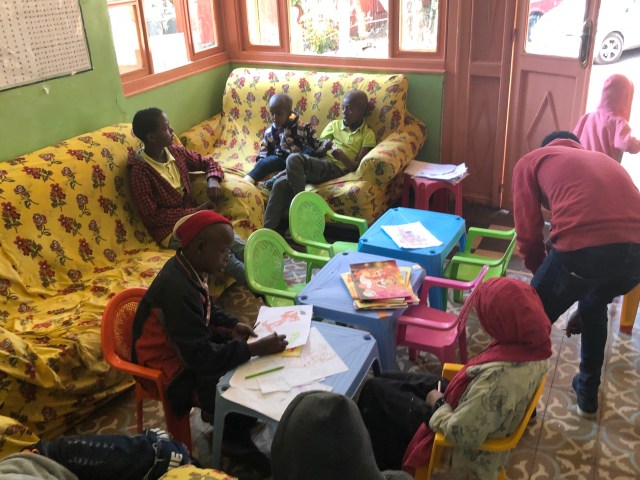
Children coloring
As they often come from far distances, many families would not be able to complete therapy nor return for follow up visits without a place to stay. This means many children would otherwise die.
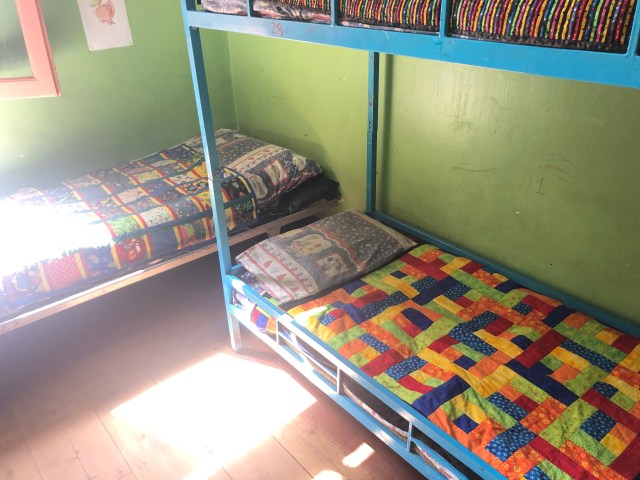
Beds for families, quilts were donated
We learned that house, and food are supplied by the Mother Theresa foundation while the Aslan Project, an American organization, supports staff and pays for childrens’ outpatient medications. The latter is TAPPCO’s biggest challenge as these necessary cancer medications, normally provided at no charge by the government, are sometimes locked up by private pharmacies which sell them at massive markups.
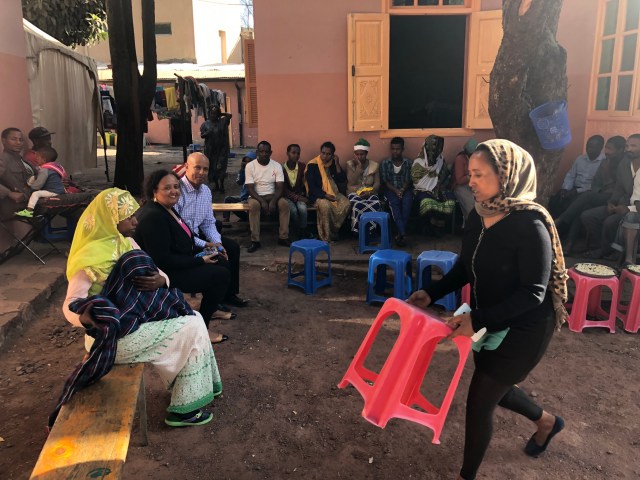
Afternoon coffee ceremony at TAPPCO family, to my right is Sara Ibrahim
As we were readying to leave, we were asked to stay a little longer for the afternoon coffee ceremony. The parents gathered in a circle, coffee and popcorn were passed around. My family financially supports TAPPCO and Sara Ibrahim, the director, made this known to the gathering. On this, two parents took turns to stand and make long speeches expressing their gratitude. Despite knowing how vast the need is and how little of it we are defraying, this was very touching.
Mother Theresa
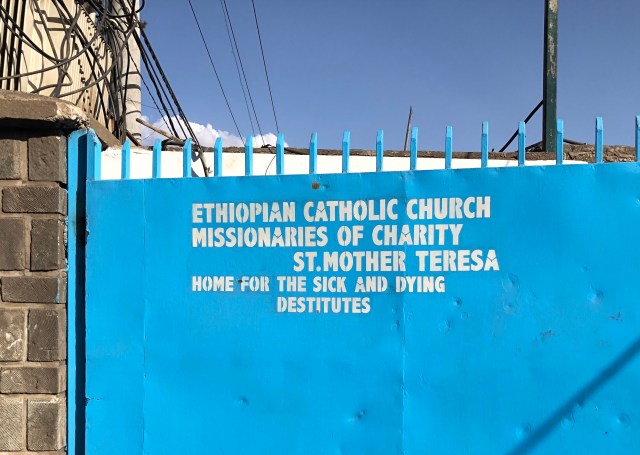
Finally we visited the Mother Theresa compound in Sidist Kilo, where patients can stay for free while awaiting hospital care or after hospital discharge.
Mother Teresa House near Sidist Kilo
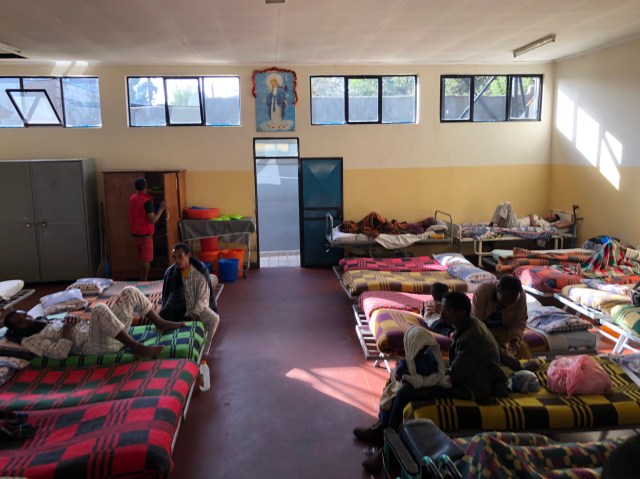
The compound also houses purely medical patients, such as those with tuberculosis or liver diseases, where they are cared for by three general practioners (GPs). A health officer gave us a tour of the very large compound which had several buildings. It was very impressive. The wards were spartan but clean. Those patients not confined to their beds were outside playing cards or chatting.
Wards were spartan but clean
We saw two patients with bone tumors we had heard were there. As is common, both had presented very late. One was an 18y girl with a massively enlarged knee. She told us it had enlarged over a year and she is now unable to walk on it. She recently had an open biopsy at Tikur Anbessa. However, pathology results can take up to a month to return so, in the meantime, she is waiting at Mother Theresa. If confirmed osteosarcoma, her only surgical option is amputation. She will likely be referred for chemotherapy after surgery. Unfortunately, this also may be a month or more delay, due to limited availability.
The other girl, 14 years old, had undergone a very high transfemoral amputation 1 1/2 weeks ago. When we arrived, she was holding a bed post, attempting to stand. She was being encouraged by a Danish physiatrist, who like the other non-Ethiopians was likely a nun. Despite being under two weeks from surgery, she was incredibly stoic. Unfortunately, she had no hamstring or adductor attachments, which resulted in a nearly fixed 90 deg flexion contracture of her short residual limb. Even if this was fixed with a iliopsoas tenotomy, she would remain unlikely to be a good candidate for prosthetic fitting. If she survives, she will likely become independent with crutches and one leg.
ESOT
The Ethiopian Society of Orthopedics and Traumatology (ESOT) holds its annual conference around July in Addis. Nearly every Ethiopian orthopedist is a member and the event is well attended. Dr. Mamo the executive president and Dr Geletaw of Tikur Anbessa is the current president. For any Ethiopian Diaspora orthopedic surgeons attending this gathering and giving a lecture, perhaps as part of a family vacation, would be a terrific opportunity to share knowledge and make connections with Ethiopian orthopedic surgeons.
During a one week stay in Addis, I visited three hospitals and met health care NGOs and Ministry of Health officials. The goal of this trip was to discover avenues where diaspora orthopedic surgeons can provide durable support for Ethiopian orthopedics. In my job, I work as an Orthopedic Oncologist in Fairfax, Virginia.
Resident Report
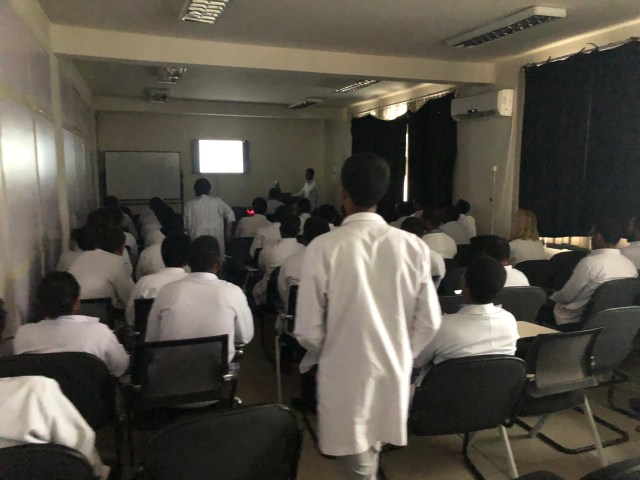
The first day was dedicated to Tikur Anbessa (Black Lion) hospital. The day started with morning report. A series of residents gave brief power point presentations of the weekend’s admissions and surgeries. Several staff members were present, including the chair Dr. Biruk.
Morning conference
Residents provided well articulated descriptions of patient histories, physical exams and X-ray findings. They were asked questions about radiographic findings and fracture patterns, which they handled skillfully. Their presentations would be at home in any US hospital orthopedic morning report.
Contributions by non-Ethopian Surgeons and Groups
After morning report we went to the OR manager’s office, which doubles as the break room and spent a few minutes sipping coffee and chatting with department members. Dr Biruk told me many outside groups come to visit Black Lion, for example just in March five different groups are coming.
Johns Hopkins annually sends a large team of orthopedic surgeons from multiple subspecialities. Dr. Alexis is an orthopedic surgeon from the Seattle area who has come annually for the last 4-5 years and stays for up to 4 weeks. He performs arthroplasty, sports and spine surgery, and works with residents on trauma cases, sometimes into night. He leaves behind instruments and implants. In fact I discovered a basically complete set of Zimmer-Biomet hip instruments including head trials, acetabular and femoral reamers and broaches. There was a locked closet full of Zimmer-Biomet hip implants, complete with stems, shells, liners and acetabular screws, all of which he left behind.
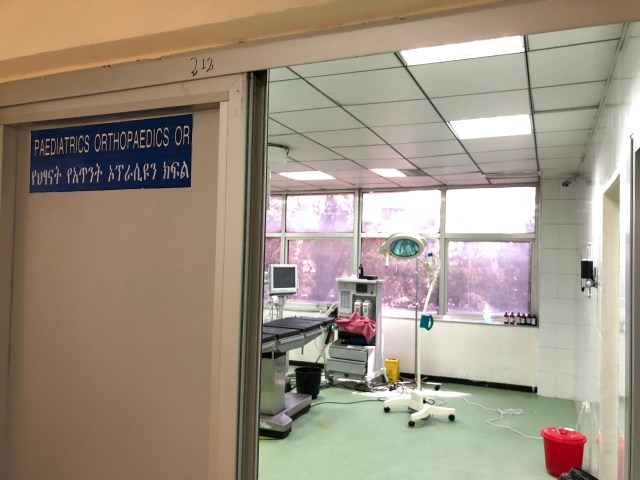
One of four operating rooms
The Australian Doctors for Africa (ADFA) has been major long term supporter. They built four operating rooms in an existing rehabilitation building, which allowed for a major expansion for orthopedics, which previously only had one room in the main hospital. In addition to this capital donation, ADFA has given other equipment, including air conditioners for the ORs. The AO foundation in Africa, jointly with ADFA, supports yearly training sessions. These include basic and pre-basic training for residents, e.g. saw bones, and training for orthopedic operating room nurses, which has significantly improved capacity.
Pelvic & Acetabulum Trauma
After our coffee break, I followed Dr. Geletaw Tessema into the operating room where he performed open reduction and internal fixation of a 2 week old open book pelvic fracture. He and the trauma fellow first exposed the symphysis pubis and, with a large pelvic clamp, attempted to reduce it. However, the fracture was too old. So, through a separate incision he exposed the left ilium at the sacroiliac joint to take down the early callus. The symphysis was then reduced and plated followed by the left ilium.
Reduction of pubic symphysis, Dr. Geletaw on left
The country refers all acetabulum and pelvic fractures to Black Lion. As would be expected, there is often a long delay to surgery making fracture reduction more difficult and bloodier. Little major pelvic trauma arrives however, as patients probably do not survive long enough for transport. The one c-arm at Tikur Anbessa has stopped working, so all reductions have to be done open, which increases blood loss and heterotopic ossification.
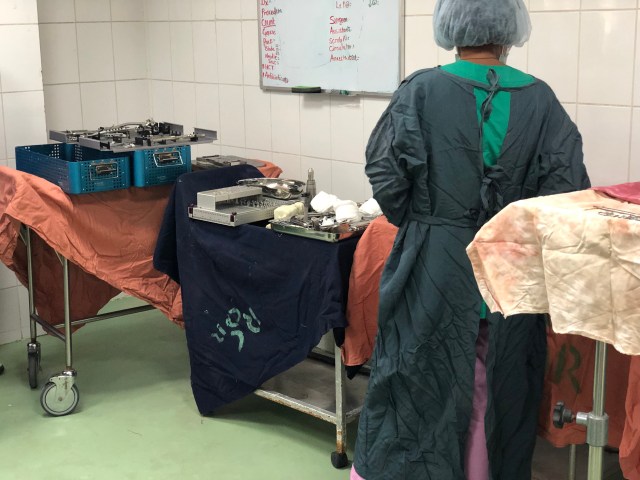
Trauma instruments and internal fixation implants are well stocked
On a positive note, unlike in the past the hospital now has a regular and ample supply of screws and plates, largely imported from India. However, specialty trauma implants, like quadrilateral plates for the medial acetabulum, are not available.
Growing Pains
From two medical schools a couple of decades ago, there are now forty medical schools in the country. I was told by another physician that the catch word was not “expansion” but “massivization”. The impetus is obvious but the growing pains are also predictable. For example, I am told that graduating medical students are no longer guaranteed jobs by the Health Ministry. Instead, they are told to seek work in the public sector. While this would seem reasonable from a Northern perspective, the private sector has not built up that capacity either.
There are now four orthopedic residency programs in the country – Tikur Anbessa and St Paul in Addis, programs in Bahir Dar and in Mekele. Most of these are new, with the oldest at Tikur Anbessa only ~15 years old. Due to the manpower deficits in the country these programs have rapidly expanded, with Tikur Anbessa now training 25 residents per class, i.e. a total of 100 residents. While residents’ knowledge and intelligence are quickly apparent, an ongoing challenge is exposure to surgery and the availability of teaching faculty.
Anesthesia
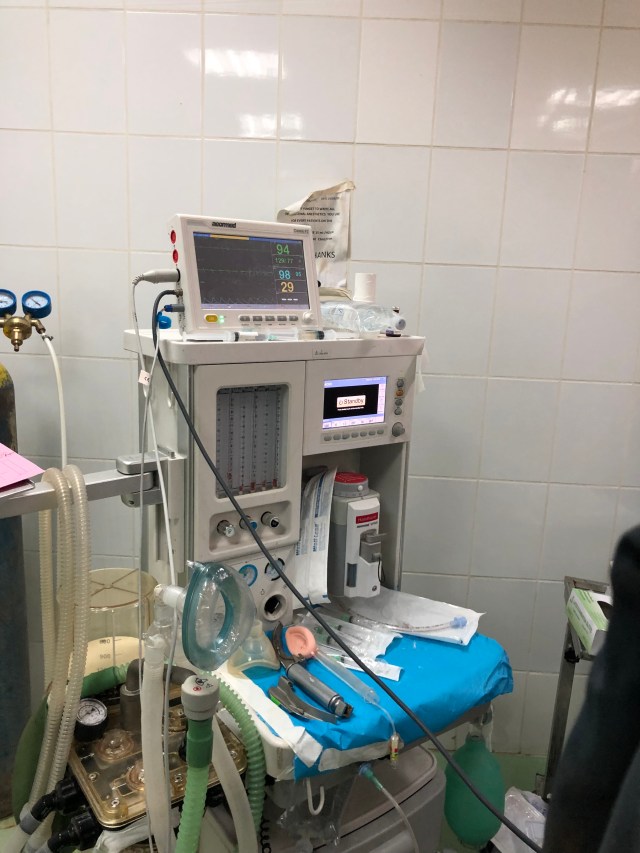
The majority of orthopedic procedures are performed with spinal anesthesia, usually done by anesthetists. There are very few anesthesiologists available. During the procedure I watched, the spinal block was incomplete in the pelvic region with the patient expressing pain. This was controlled with a propofol drip, the patient was not incubated. I was told that regional blocks (e.g. sciatic/femoral/interscalene) are not performed.
Modern working anesthesia machine
I did not ask at Black Lion but I was told there are ultrasound machines available at AaBET.
Arthroplasty and Equipment
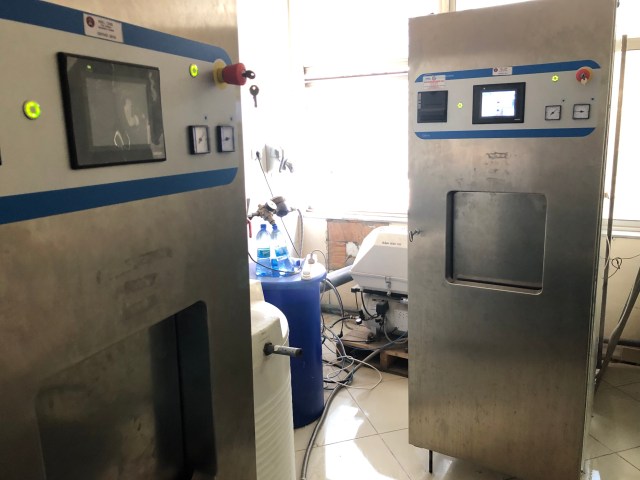
At Tikur Anbessa, there are two arthroplasty trained surgeons, Drs Samuel and Geletaw. Their Toronto fellowship included hip arthroplasty along with pelvic/acetabular trauma. There is a working Stryker 5 set, in addition to which they have available household (Bosch) battery powered drills, which are covered with hand-sown sterile covers in the field. There are two working autoclaves which can fit two large trays. As mentioned above, there are available arthroplasty instruments and implants.
Two working autoclaves
Despite this, no elective arthroplasty is being performed. According to the OR manager, there is a waiting list of over 500 patients. The bottleneck is time. Too much acetabular trauma comes in for surgeons to take on elective hip arthroplasty. At this time, there are no surgeons trained in knee arthroplasty at Black Lion (or AaBET), nor are there knee arthroplasty instruments and implants. Patients can go to private hospitals and surgical centers, some of which can and do perform arthroplasty, but at an out of pocket cost of ~160-200,000 Birr ($7K USD) which of course rules it out for the vast majority of the population.
Drs Addisu and Fasil traveled to Addis Ababa for two weeks in January and worked with the orthopedic and neurosurgery departments at AaBET hospital. Dr Addisu Mesfin is an orthopedic spine surgeon in Rochester NY, Dr Fasil Mesfin is a neurosurgeon in St. Louis, Missouri.
AaBET hospital is part of St Paul University and located a short distance from the main Gulele campus, just behind Yohannes church. The initials stand for “Addis Ababa Burns, Emergency and Trauma” and the name was coined in part to mimic “Abet !”, i.e. the affirmative “yes !” (personal communication).
Over 2 weeks, the two surgeons completed numerous spinal procedures, including instrumented fusions, sometimes staying late into the evening to complete the surgeries. As a ministry public hospital, AaBET is very poor in resources. It is in a converted building not designed as a hospital, which impedes the natural flow of patients and staff. The emergency area is overflowing, wards are simply rooms with beds against the walls and the general level of cleanliness does not easily recall an American hospital. Nevertheless, by his report, Dr Addisu found the hospital functional. He found the surgeons to be welcoming, surgical instruments to be adequate, and autoclaves big enough to handle spinal trays. Digital radiography is available throughout the hospital which greatly simplifies tracking of patient imaging.
Based on this good experience and a previous trip just over one year ago, he plans to continue returning to Ethiopia on an annual basis to do spine surgery.
 Ethiopian Diaspora Surgery Network