Thursday Jan, 26
This is one of a five part series of a visit to Mekelle, Tigray and Addis Ababa in January 2024. Below are links to the series, or you can just follow the “next” and “previous” links at the bottom. You can send a message to the author here.
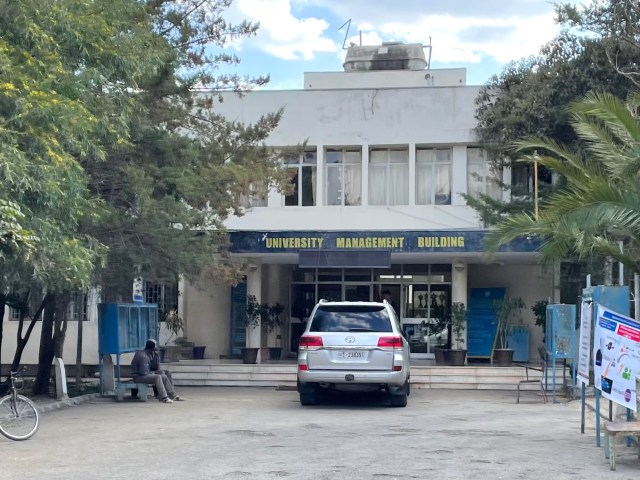
We left Adigrat midday to return to Mekelle and went to the university. I met with Dr Abdulkadir Kedir, academic VP of the university to discuss their request for access to online libraries. This was on behalf of one of my family members who is the executor of a bequest of late Tigrayan to fund support higher education in Ethiopia. Dr Kedir called the director of the library Dr Gebremedhin Araya Hibu to come over and meet with us. Both were very enthusiastic at the prospect of getting support to digital access to publishers. They already have access to Research4Life. I had found that some of their high priority libraries have free or reduced access for LDICs. Dr Abdulkadir was especially interested in getting access to digital text books, particularly in the medical and technical fields. He said Dr Gebremedhin will do the work necessary to gain access, we only have to be concerned with the support. Dr Gebremedhin said he will do some research on students actual information seeking habits to see what would be valuable to have access to. Afterwards, he walked me into the president’s office so I can greet Dr Fana Hagos. She received us very warmly.
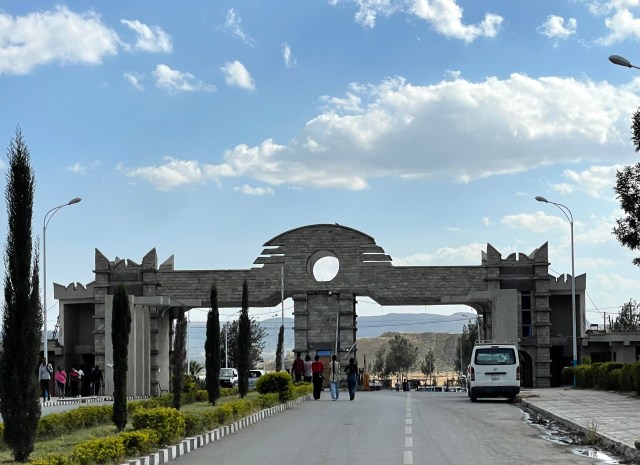
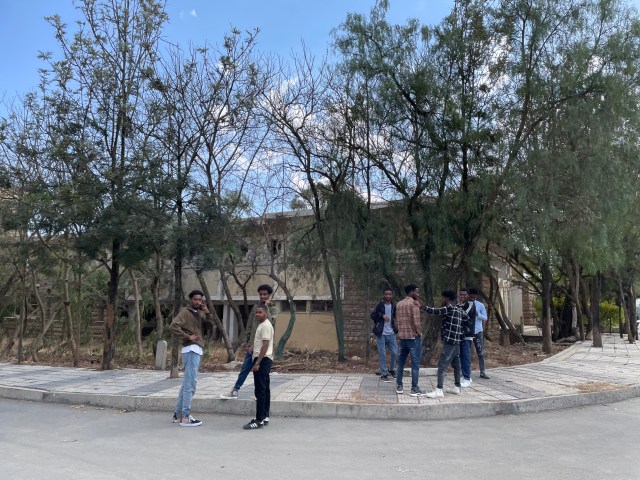
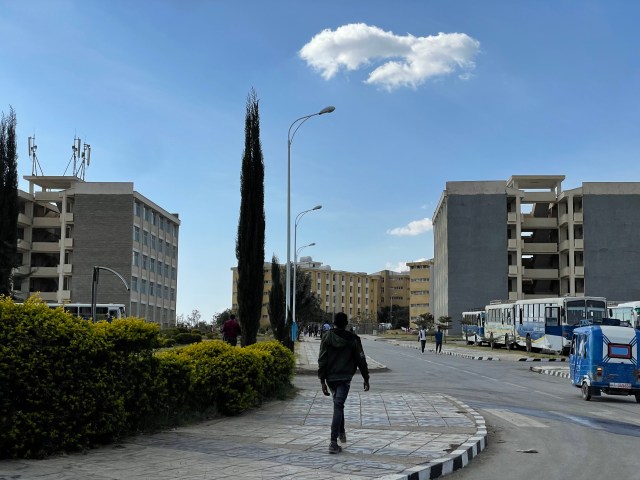
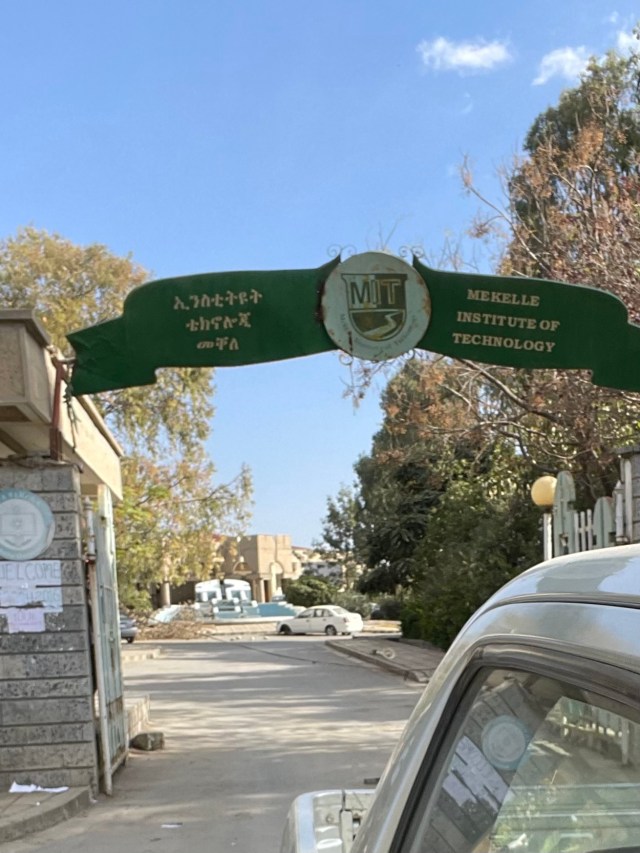
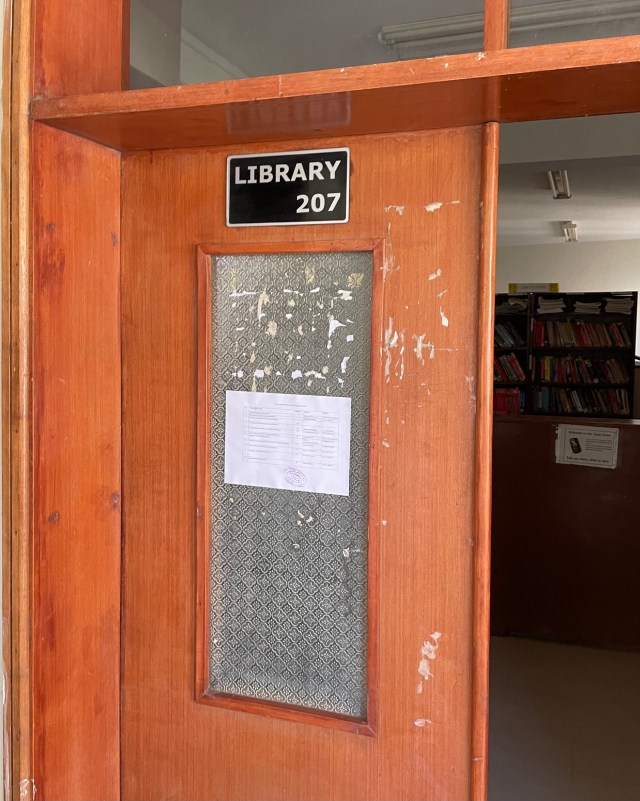
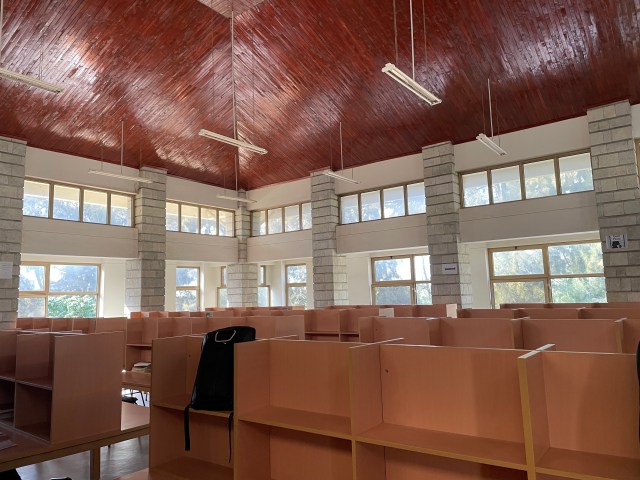
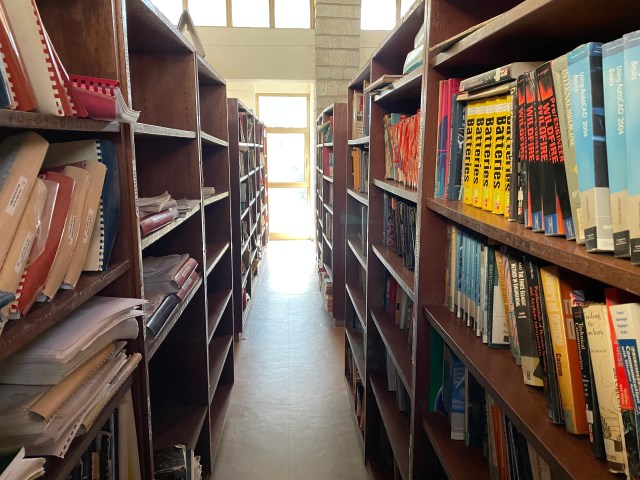
After we left the main university campus, we made a quick detour to the Mekelle Institute of Technology (MIT). We ran into Dr Kiros Hagos, the academic dean who gave us a brief tour. The campus was opened in 2011 with four faculties: electronics & communication technology, information science, computer science and one other. Since then, they have added biomedical engineering and material science. Civil and structural engineering is on the main campus. We saw the library, which is a lovely high-ceilinged room with attractive study cubicles. Their book collection however was very slim, with many volumes hand photo-copied and most very out of date.
In the evening, Brhane Teame the manager of MPOC came to the hotel. He gave a very clear description of their greatest challenges. Even before the war, they were one of the biggest if the not the biggest center that the ICRC supports worldwide. With the war, their backlog ballooned to 2500 patients or 9 months. They have been working double shifts, from 8 am to 10pm, since the war ended and they have now cleared their backlog of prosthetics. They still have a small backlog of orthotics.
He detailed their several challenges. The first is the technology available to them. The ICRC champions low cost solutions and access to all. However, the prosthetic they can make are heavy and relatively uncomfortable. They are also less durable. New technologies, such as laminates, are lighter and more comfortable. Prostheses for above the knee (transfemoral) amputations still require belt suspension, which uncomfortable. The knee mechanisms are a simple, undamped design. The ankles for transtibial (below knee) amputations are simple uniaxial hinges. They have challenges with training for prosthetists. About a decade ago a training program was launched in Addis graduated 3 batches of prosthetists and closed due to lack of funding. Currently prosthetists are trained informally on the job, some have gone to abroad for brief periods. He again mentioned the challenge of keeping physical therapists since the salary is so low. The buildings in which they work were originally a feeding center during previous food shortages and not built appropriately for a workshop with large heat producing equipment. Since their patients come from all over, managing minor problems such as a broken foot is burdensome for patients. They would like to expand their outreach program. Their current vehicle is 38 years old so not safe enough for appropriate outreach to rural communities.
Dr Amanuel also came to the hotel. I had requested a little more time to help me solidify my ideas, having toured the various facilites. We had another long conversation, this time more focussed on professional development. He share a couple of anecdotes of visiting doctors who helped identify promising physicians, who then went on to training abroad. As they returned they built programs to expand care into new directions, for example in critical care medicine and laparoscopic surgery. His observation was that the doctors, once trained and committed to their subspecialty, drive continued training at Ayder and the acquisition of critical equipment such as ventilators and laparoscopic towers.
When he was chief of Ayder, they would get funds for various health projects. From those grants, he would keep 10% administrative fee and used it to fund training abroad. This has since stopped. The government does not fund foreign fellowship training.
I suggested that establishing a competitive scholarship to fund fellowship training abroad would be very effective way to identify and develop talent. He was very enthusiastic about this idea. I think this could be my focus: invest in people.
 Ethiopian Diaspora Surgery Network
Comments are closed.