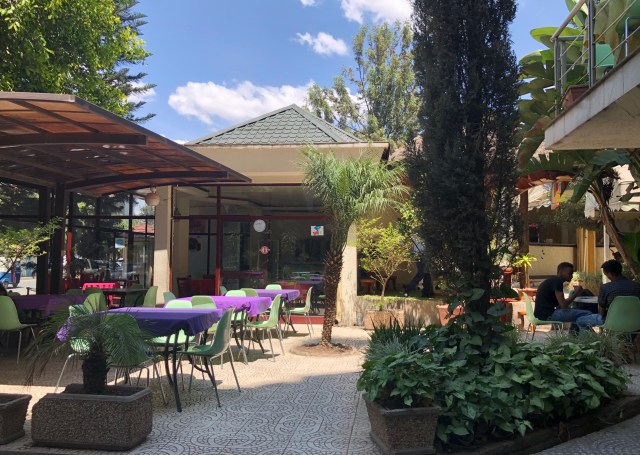
On Friday, I took a 45 minute flight from Addis to the Hawassa airport. There, a hospital chauffeur met me and took us on a scenic 30 minute drive around Lake Hawassa, through the town and to the hospital. Hawassa is the capital of the Southern Peoples Province (“Kilel”) and the second most important city in Ethiopia. Along with Addis Ababa, Dire Dawa and one other city, it has its own administration as a city-state. It is also a pleasant multi-ethnic lakeside city, popular with Ethiopian and foreign tourists.
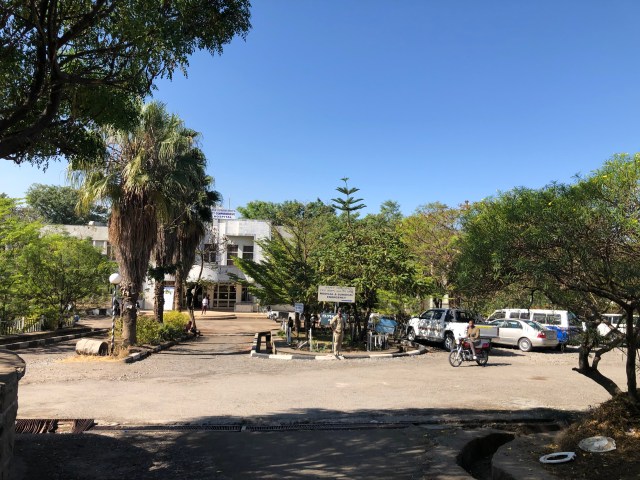
The government has undertaken a large expansion of the university in Hawassa. As with Tikur Anbessa, the university and thus the hospital are managed by the Ministry of Education.The Ministry of Health administers most of the other hospitals, including St. Paul AaBET. By most accounts I heard, hospitals managed by the Ministry of Health have more generous budgets than those managed by Ministry of Education, which allocates hospital funding under a broad “Community Services” umbrella.
Orthopedics
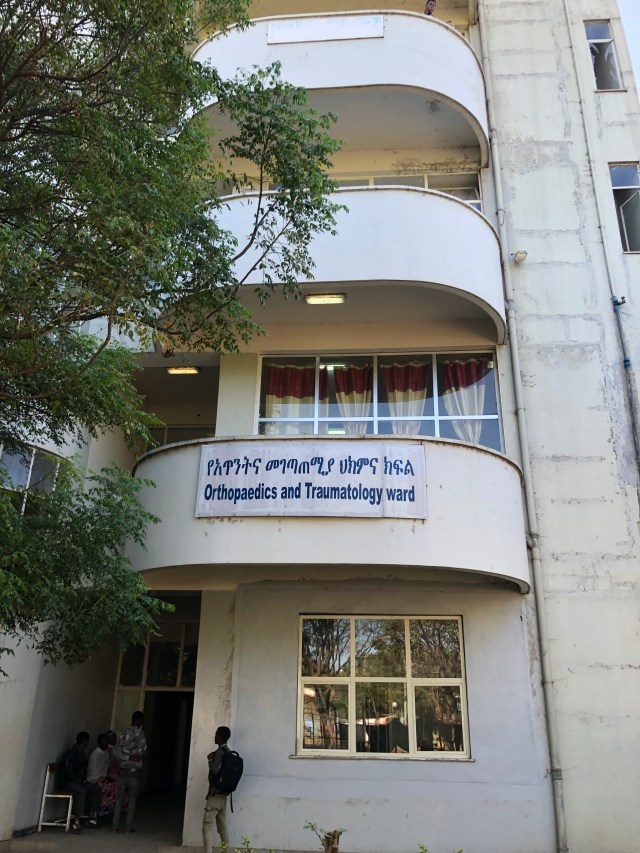
Perhaps the above was part of the reason there was no orthopedic department until 3 years ago. Before then, all patients with orthopedic injuries were shipped about 100km away to Soddo Christian hospital, or more than 300km to Addis Ababa.
I was given a tour of the hospital by the remarkably able Dr. Ephrem Gebre-Hana. He started the orthopedic department on arriving 3-4 years ago, immediately upon finishing his residency. Since then, he has been promoted to Clinical and Medical Director of the hospital, roughly equivalent to the CEO. 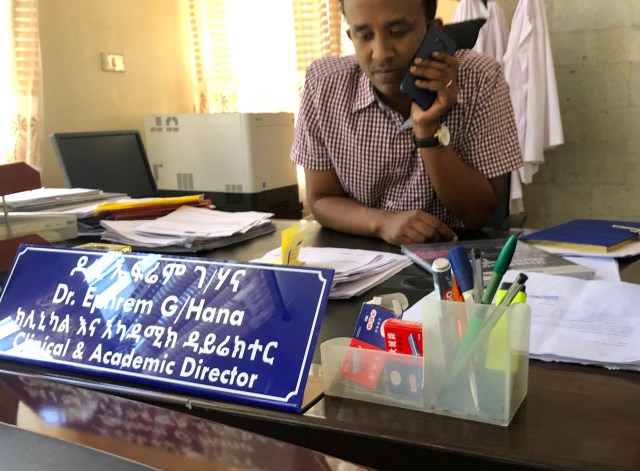
Dr Ephrem shared the immense volume of trauma handled at Hawassa. He estimates 60-70% of orthopedic admissions are open fractures. This comes to 5-6 new open fractures daily, largely due to motor vehicle and motor cycle accidents. It is very difficult to keep up with only three staff orthopedic surgeons.
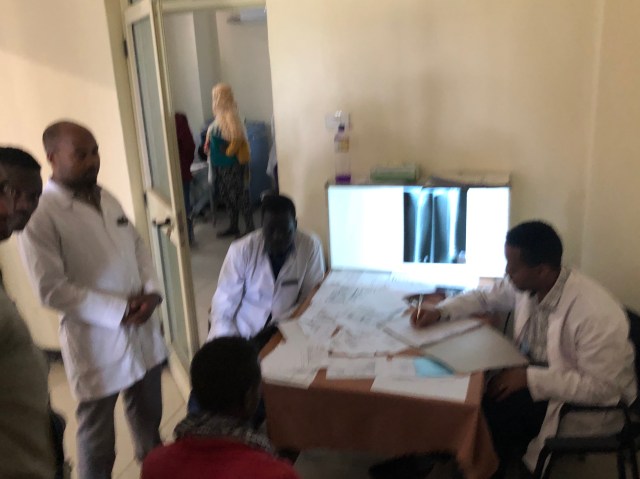
Hawassa has one of the largest SIGN nail programs in Ethiopia (the largest is St. Paul AaBET). The SIGN nail program is a monumental advance for trauma care in less developed countries. Created by Dr. Lawrence Zirkle of Seattle, the program provides free intramedullary nails throughout the developing world with the only requirement being that participating centers file reports containing preoperative, postoperative X-rays and a photo of the healed patient squatting. At Hawassa, rotating residents file reports nearly daily, using a browser-based online interface. They implant 30-35 nails per month.
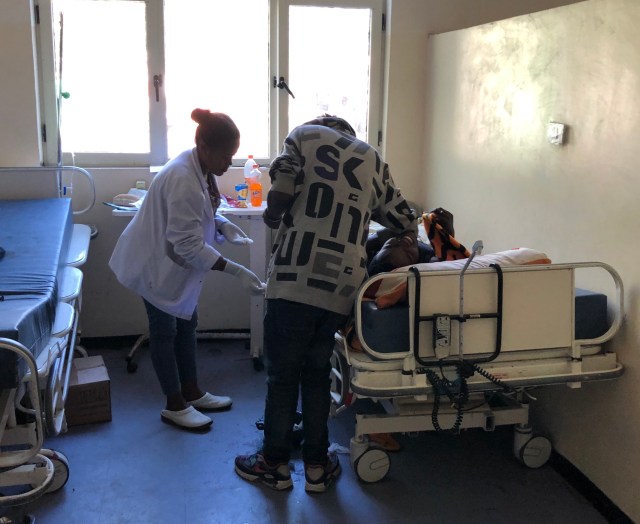
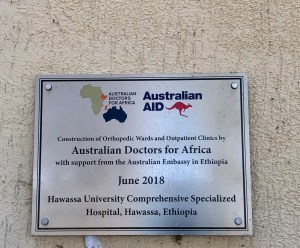
We saw a new 14 bed pediatric orthopedic ward donated in part by Australian Doctors for Africa (ADFA). With multiple windows and high ceilings, it felt far more comfortable than the adjacent adult orthopedic ward of ~24 beds, which was originally used for storage and repurposed as a patient ward by Dr. Ephrem.
Operating Rooms
I then toured the operating room with orthopedic OR manager. There were three rooms in a new building and five in an older building, two of which are dedicated for c-sections. Apparently, the c-section volume is immense. The other rooms are dedicated to plastics, orthopedics and general surgery. They perform ~3 elective cases per room per day. The OR runs 3 shifts. There are always night cases, and all rooms run during the weekend. While there, I saw on open reduction and internal fixation of a two week old, grade 3 displaced supracondylar pediatric elbow fracture as well as neonatal meningomyelocele repair.
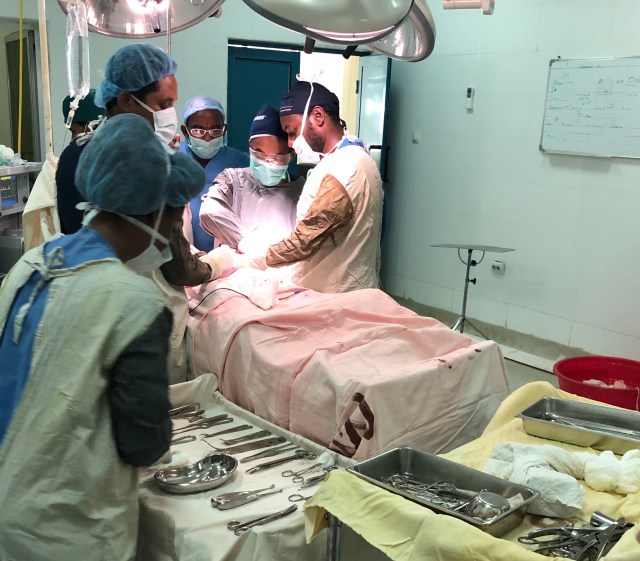
In terms of supplies, the SIGN program provides new intramedullary nails in batches of 20 when centers run out. Despite this, there are times when shipments do not arrive in time and they run short. They can buy Indian made plates and screws locally using hospital funds but the procurement process can sometimes be problematic. Also, some trauma implants are not available locally, for which they depend on donations. For example, their AO external fixators are all donated.
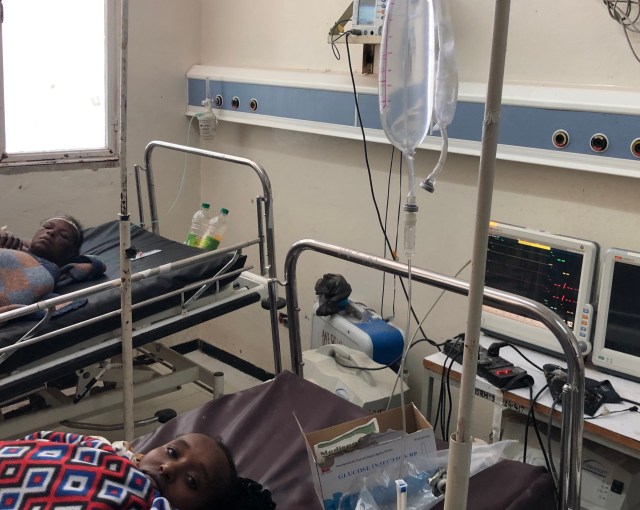
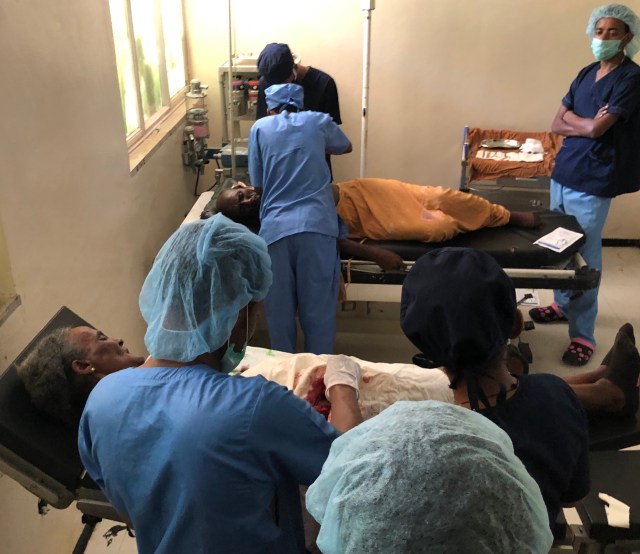
They have 2 electrocautery machines for 6 rooms, so they have to rotate them, which can delay cases. Attending surgeons may not available if they are in clinic or teaching, so rooms may be idle (two were the day I was there). They have a new laparascopy cart with which they can perform laparascopy and cystoscopy. They reuse trocars. They do not have an orthopedic power system (e.g. Stryker 5 or 6) but rather use household Bosch drills with sterile cloth covers and autoclaved chucks.
Sterile Processing
There are two steam sterilizers, although one is broken. Twelve staff members work three shifts. There is no formal training program for sterile processing staff, only 1-2 months on-site training. I have not seen any gas sterilizers (e.g. “Sterrad”) at any hospital thus far.
Soddo Hospital
Soddo Christian Hospital is supported by the American Adventist Church. Orthopedist Dr. Duane Anderson has been there for many years. His service has been indispensable, not only for the patient care he has provided, but also teaching Black Lion residents who have been rotating there for many years. He has now started his own residency program, which I understand has curtailed this rotation significantly. In addition to Dr. Anderson, other American orthopedic surgeons from the Pan-African Academy of Christian Surgeons (PAACS) rotate through Soddo hospital.
posted by Felasfa Wodajo
 Ethiopian Diaspora Surgery Network